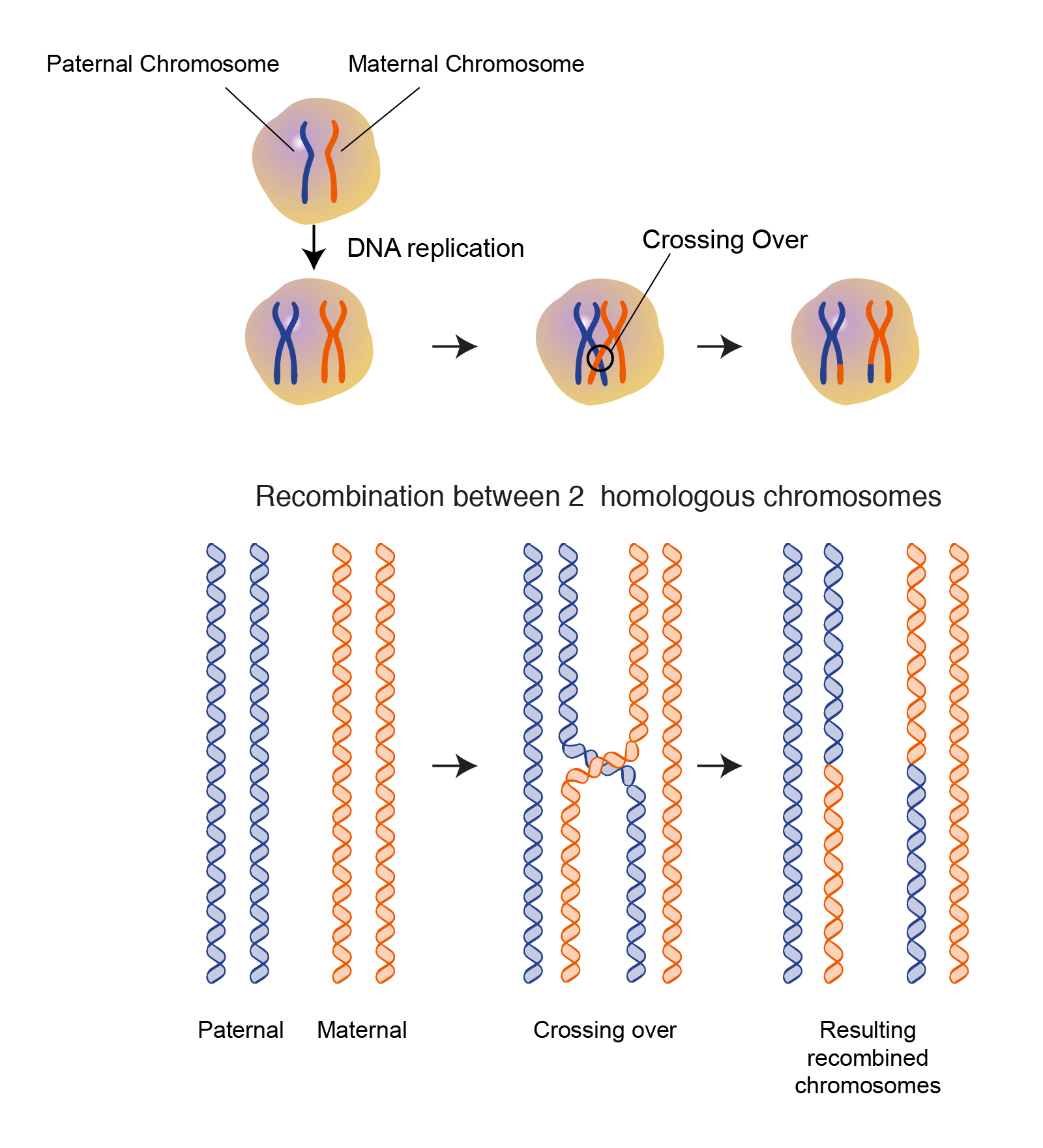
Modeling the Homologous Recombination Process Biology Diagrams Homologous recombination (HR) comprises a series of interrelated pathways that function in the repair of DNA double-stranded breaks (DSBs) and interstrand crosslinks (ICLs). In addition Learn about homologous recombination, the exchange of genetic material between two strands of DNA that contain long stretches of similar base sequences. Find out how it occurs naturally and in genetic engineering, and its role in DNA repair, meiosis, and evolution.
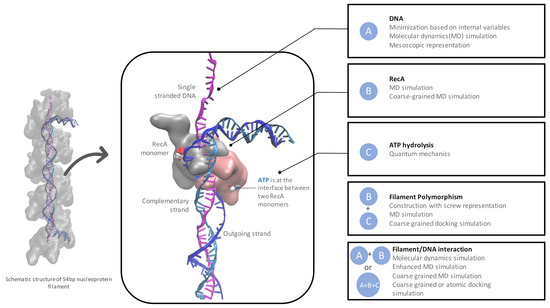
DNA Molecules Recombine by Breaking and Rejoining. Genetic recombination was first defined by studies of Drosophila, on the basis of the observation that genes on different copies of homologous chromosomes can reassort during meiosis.With the subsequent discovery that genes consist of DNA, two alternative models to explain recombination at the molecular level were considered (Figure 5.28).
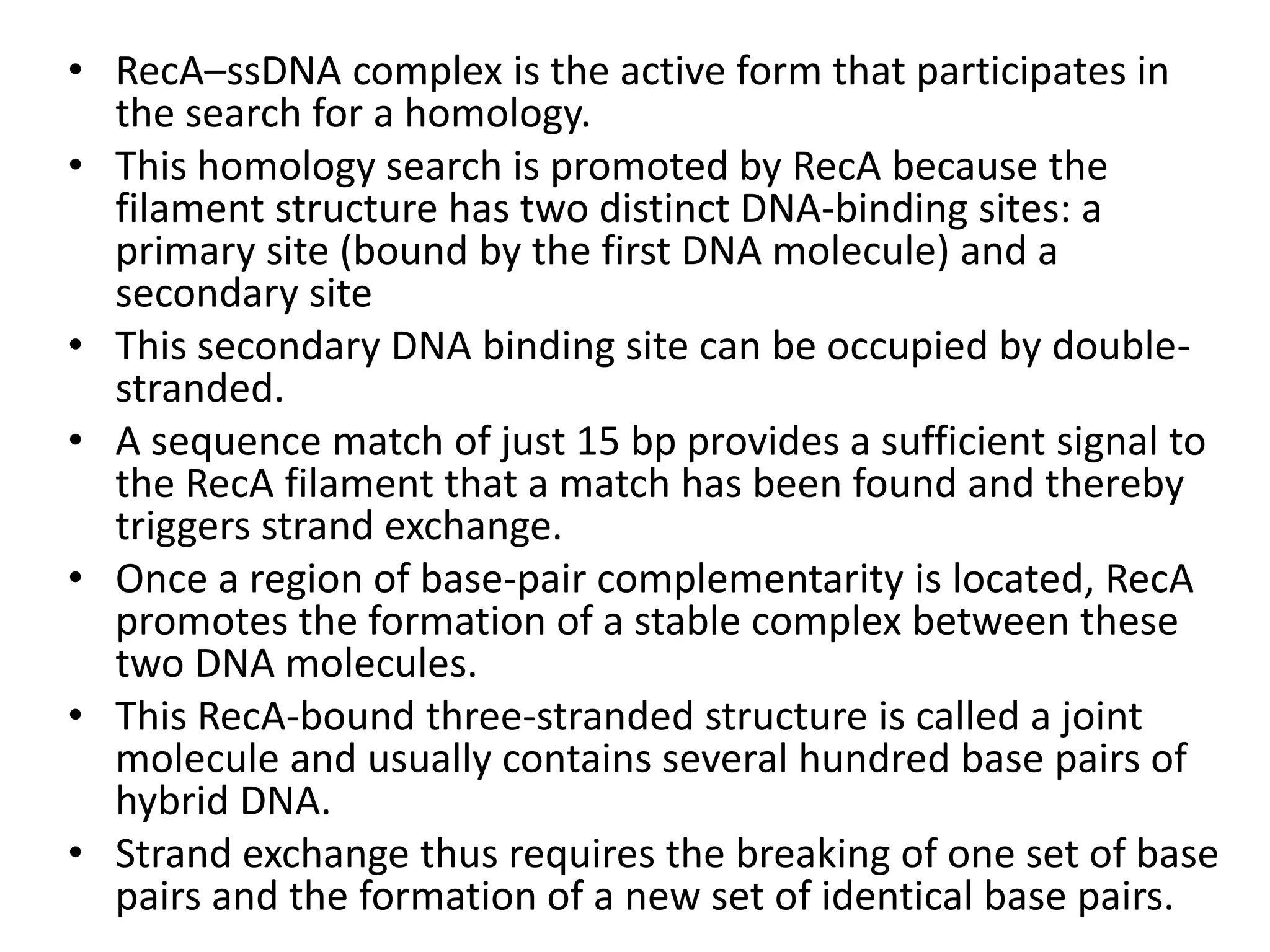
PDF Mechanism of homologous recombination: mediators and helicases take on ... Biology Diagrams
Learn the definition and narration of homologous recombination, a type of genetic recombination that occurs during meiosis. Find out how it contributes to the genetic variation among offspring.
Homologous recombination is the exchange of genetic information between two similar or identical strands of DNA. Learn how it occurs in eukaryotes, bacteria and viruses, and how it is used in genetic engineering and evolution. machinery, and recombination of a damaged DNA with its sister chromatid re-establishes the DNA replication fork3. Meiotic recombination is 100-1,000-fold more fre-quent than mitotic recombination, and it usually involves homologous chromosomes and generates chromosome-arm crossovers. These crossovers are essential for proper Homologous recombination occurs in meiotic cells. In most species, every chromosome will undergo at least one recombination event. However, the ability to use one chromosome as a template for a broken one can also be used in instances of DNA damage, especially DNA backbone breaks. Remember that outside of meiosis I, homologous chromosomes are
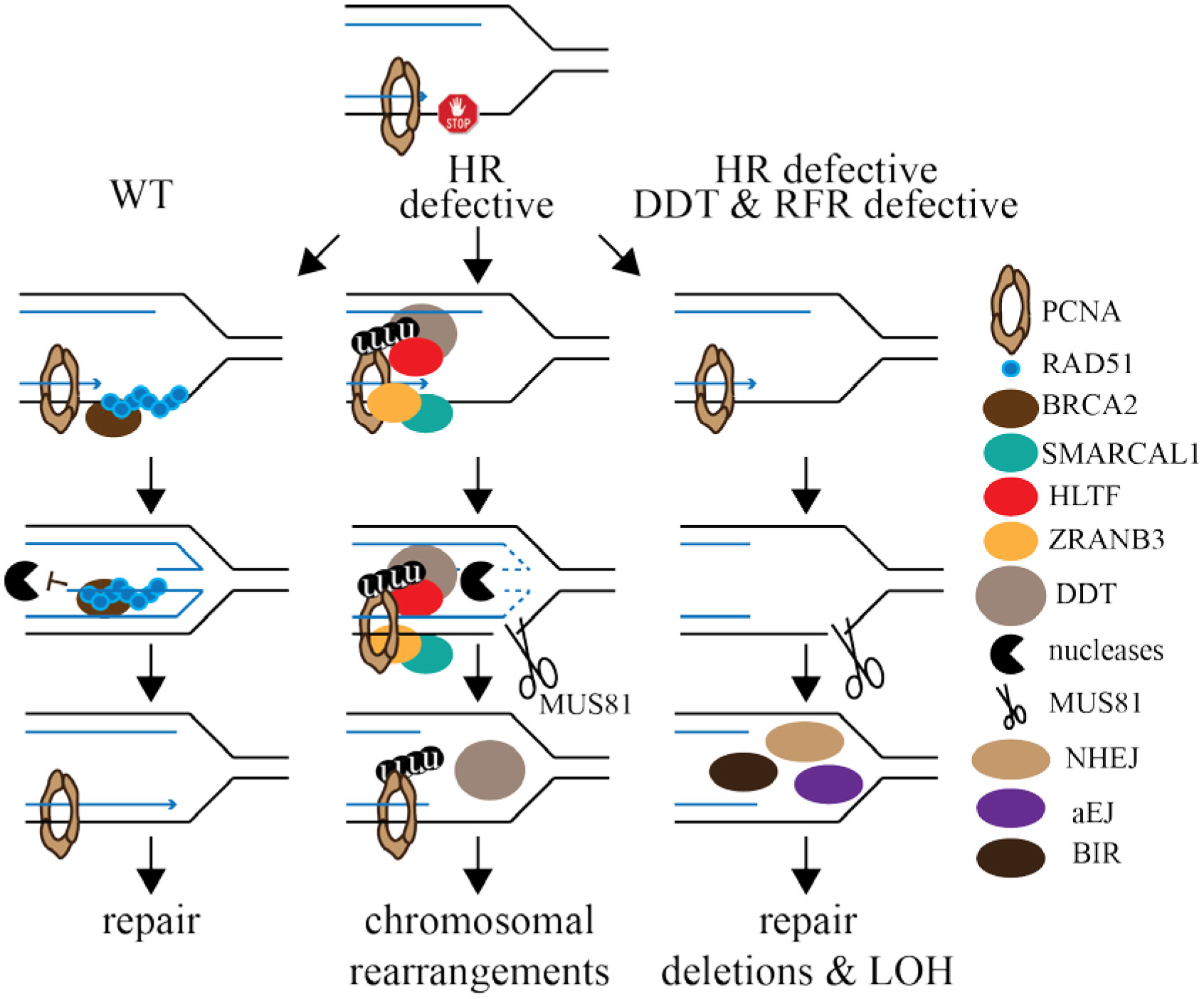
Homologous recombination Biology Diagrams
Learn about homologous recombination, a type of genetic recombination that exchanges DNA between similar or identical molecules. Find out how it works, why it is important, and how it is used in gene targeting and evolution.
Homologous recombination (HR) is an important mechanism for the repair of damaged chromosomes, for preventing the demise of damaged replication forks, and for several other aspects of chromosome